

Part D Premium Subsidies Are Ending
One of the biggest developments involves the Part D Premium Stabilization Demonstration, a temporary program introduced by the Biden administration following major changes to Medicare Part D under the Inflation Reduction Act.
The program provided additional federal subsidies to stand-alone Medicare Prescription Drug Plans (PDPs) to help prevent dramatic premium increases as insurance companies adjusted to the redesigned Part D benefit.
In 2025, the program reduced the base premium used in plan calculations by $15 per month and limited year-over-year premium increases. In 2026, the subsidy was reduced to $10 per month and the allowable premium increase was expanded.
That additional subsidy will end after December 31, 2026.
CMS has determined that insurance companies now have enough experience with the redesigned Part D program that the additional assistance is no longer necessary.
What does this mean for you?
It does not mean everyone’s prescription drug premium will suddenly skyrocket. However, without the additional subsidy, some stand-alone Part D plans could experience larger premium changes in 2027 than we have seen during the past couple of years.
The national Part D base beneficiary premium for 2027 has been set at $41.33, a 6% increase from 2026. Your actual premium will depend on the insurance company and specific plan you select.
That is precisely why simply allowing your current plan to automatically renew may not be the best strategy.
Medicare Is Expanding Access to GLP-1 Weight-Loss Drugs

There is also significant news regarding popular GLP-1 medications.
Historically, Medicare has generally been prohibited from covering medications when prescribed solely for weight loss. Certain GLP-1 medications could already be covered when prescribed for another Medicare-covered indication, such as diabetes, cardiovascular disease, or certain other qualifying conditions.
That landscape is changing.
Beginning July 1, 2026, CMS launched the Medicare GLP-1 Bridge, giving qualifying Medicare beneficiaries with Part D coverage access to certain GLP-1 medications for weight management.
Eligible beneficiaries who meet the program’s clinical requirements can receive qualifying medications for a $50 copay for a monthly supply.
Importantly, this program operates outside the normal Medicare Part D benefit. Therefore:
- The Part D deductible does not apply to medications obtained through the Bridge.
- The $50 copay does not count toward the beneficiary’s Part D out-of-pocket spending.
- Low-Income Subsidy/Extra Help cost-sharing does not reduce the $50 copay.
The program has now been extended through December 31, 2027.
Not everyone taking a GLP-1 will qualify, and coverage still depends on the medication, medical indication, clinical eligibility requirements, and how the prescription is being used.
Annual Enrollment Is Just Around the Corner
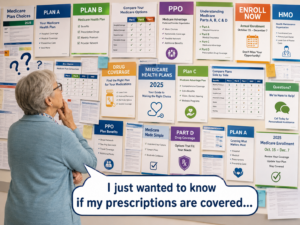
Medicare Annual Enrollment runs from October 15 through December 7. Because of the Medicare Part D changes 2027is expected to bring, reviewing your current prescription drug coverage could be particularly important this year.
Every Medicare beneficiary should review their plan before automatically renewing for 2027.
At Laurel Insurance Partners, we can help you compare your existing coverage with the 2027 options available in your area.
Main Telephone: (828) 513-5045
Email: beau@laurelinsurancepartners.com
Website: www.laurelinsurancepartners.com
Sources
The Wall Street Journal, “Trump Fixes a Biden Medicare Trick,” July 2026.
Centers for Medicare & Medicaid Services (CMS), “Medicare Part D 2027 National Average Monthly Bid Amount Information,” July 28, 2026.
Centers for Medicare & Medicaid Services (CMS), “Medicare GLP-1 Bridge,” updated July 13, 2026.